
Cold rooms, drafts around the attic hatch, and heating bills that keep climbing often point to one problem: air leakage through the building envelope. When warm indoor air escapes through top plates, penetrations, rim joists, or the ceiling plane, it carries heat and moisture with it, which can leave certain rooms uncomfortable and can contribute to attic frost, condensation, and ice-dam conditions.
London Insulation Company provides air sealing services for homes and light commercial properties at 413 Hamilton Rd, London, ON N5Z 1R8. We track leakage paths, reduce uncontrolled airflow, and coordinate sealing with insulation upgrades so the envelope works as a system instead of a collection of weak spots.
Most homeowners notice the symptoms before they see the source. A bedroom over the garage feels colder than the rest of the house. The basement stays drafty even when the furnace runs. An attic shows frost on roof sheathing after a cold snap. Those problems often start at small gaps that connect indoor air to unconditioned spaces.
Air sealing focuses on the points where the building envelope is interrupted. Even when insulation depth looks acceptable, moving air can bypass it and reduce effective R-value. That is why sealing and insulation need to work together, especially across Southwestern Ontario homes that deal with wide seasonal temperature swings and indoor humidity changes.
Air sealing reduces conductive heat loss that is amplified by air movement across cold surfaces. It also limits moisture-laden indoor air from reaching cold roof sheathing or cold foundation materials where the dew point may be reached. When that happens, condensation can accumulate, insulation can lose performance, and wood or masonry components can stay damp longer than they should.
For homeowners, that shows up as fewer drafts, less temperature swing between rooms, and less strain on heating and cooling equipment. It can also support better performance from attic insulation, blown-in insulation, spray foam insulation, batt and fibreglass insulation, mineral wool, or rigid foam where those materials are already part of the assembly.
Air sealing is especially useful before or alongside attic insulation top-ups, basement insulation, wall insulation, crawl-space insulation, garage insulation, and new-construction insulation work.
London Insulation Company starts with a close look at the envelope rather than guessing from one room to the next. We check how air is moving, where thermal bridging is most noticeable, and which gaps are worth sealing first.
This approach is useful for older homes with mixed materials as well as newer houses where penetrations, attic bypasses, and utility openings still weaken the air barrier.
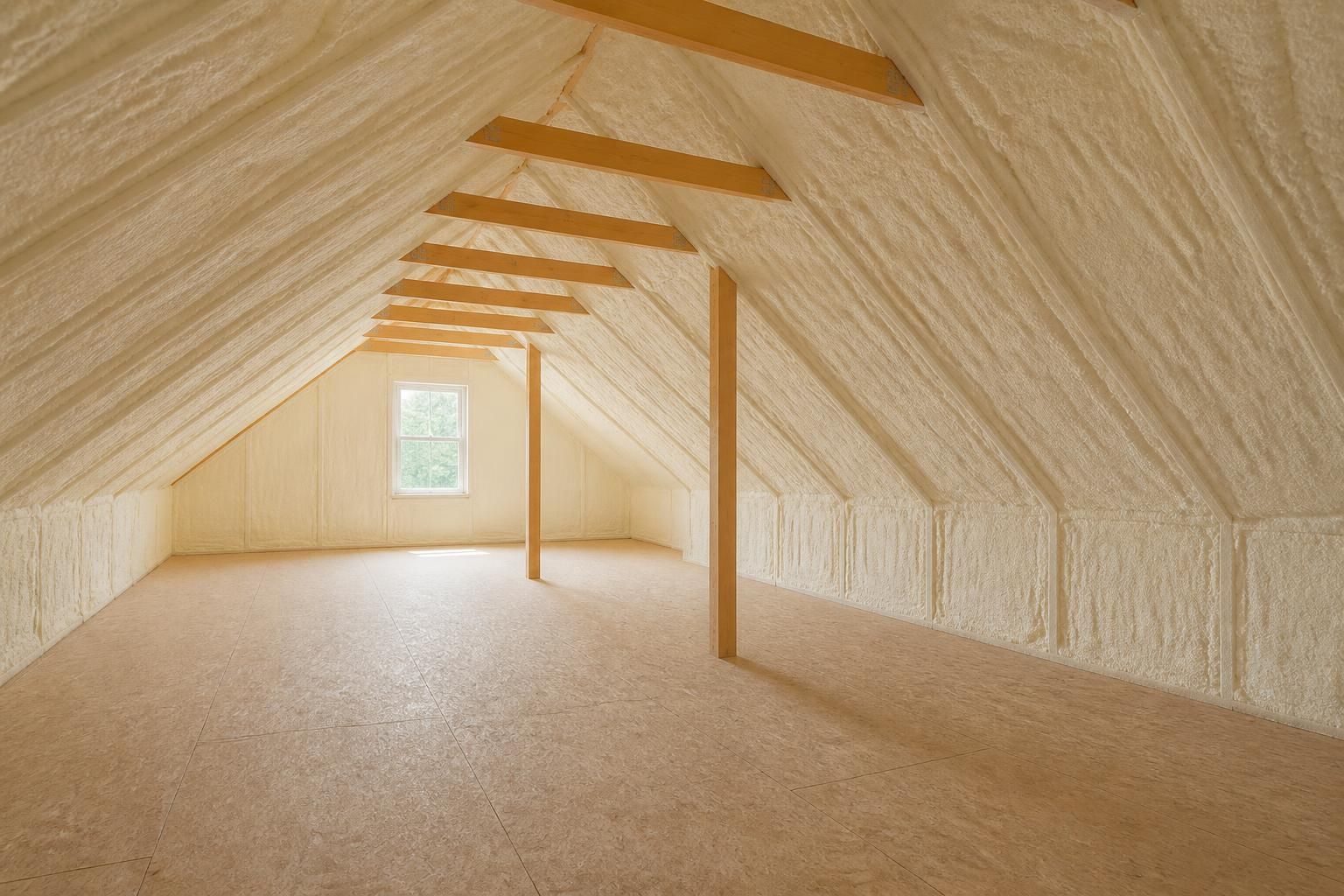
Attics are often the biggest source of heat loss because warm air naturally rises and pressure differences pull it through openings. If the attic hatch leaks, soffit baffles are blocked, or top plates are exposed, the ceiling plane becomes a major bypass route. Over time, that can contribute to uneven insulation temperatures, frost on roof sheathing, and damp insulation near the eaves.
Air sealing at the attic level often focuses on:
When air movement is controlled first, attic insulation can perform closer to its intended R-value because the thermal boundary is less disrupted by moving air.
Basement air sealing matters because rim joists, sill plates, and concrete foundation wall transitions are frequent leakage points. Cold air entering here can create a floor that feels chilly above, even when the living space itself is insulated. In damp or seasonally cool areas, those same openings can also invite condensation on cold surfaces.
At basement level, sealing is often paired with insulation that matches the assembly. That might include closed-cell spray polyurethane foam, rigid EPS or XPS where suitable, or a combination of air sealing and fibreglass or mineral wool strategies. The goal is to limit air leakage while also reducing conductive heat transfer through the rim and band joists.
Air sealing is not only about comfort. It also helps manage moisture migration. In winter, indoor air often holds more moisture than the outside air. If that air leaks into cold attic or wall spaces and reaches the dew point, moisture can condense on roof sheathing, framing, or other cold surfaces. Repeated wetting can leave frost patterns, damp insulation, and staining that point to a control problem rather than a ventilation problem alone.
We look at the whole assembly: air barrier continuity, vapour control, insulation depth, and where cold surfaces are most exposed. In some cases, spray foam at specific transitions may help reduce both leakage and thermal bridging. In others, a careful sealing plan followed by insulation removal and replacement is the better route.
Several Ontario programs may help offset eligible home-energy work, though qualification, scope, and program rules can change. We encourage homeowners to review current details before starting work.
Home Renovation Savings program: The current standalone attic-insulation pathway may offer 50% of eligible project cost up to $1,250, depending on starting R-value and program requirements. The bundled energy-assessment pathway currently includes incentives that may reach up to $1,500 for attic insulation, $3,600 for exterior walls, $2,300 for foundation insulation, $300 for exposed floors, and $250 for air sealing, plus a $600 home-energy-assessment rebate and possible bundle incentives. Home Renovation Savings
Energy Affordability Program: Qualifying Ontario households may receive no-cost attic or basement insulation and draft-proofing measures, subject to household, home, and heating eligibility. Energy Affordability Program
BetterHomes London: If you are considering local financing or related support, verify current program details directly before planning work. We can help you think through the scope of air sealing, but we do not assume rebate approval or eligibility.
Air sealing is often the first step, but not always the only one. A tighter envelope makes insulation more effective, and insulation helps the sealed assembly hold temperature more evenly. That is why homeowners often combine air sealing with one or more of these services:
If old insulation is contaminated, displaced, or hiding air pathways, removal can make room for a cleaner sealing and re-insulation plan. In new-construction work, air sealing can help establish a continuous air barrier from the start instead of chasing leaks after drywall goes up.
Drafts near baseboards, cold spots above rim joists, uneven room temperatures, and persistent attic frost are common clues. A blower-door test and thermal imaging can help confirm where the leakage is happening.
It can. When moist indoor air is kept out of cold attic spaces, the chance of condensation on roof sheathing is reduced. That said, the whole attic assembly still needs correct ventilation paths and insulation depth.
Often yes, but access matters. Some bypasses can be sealed from below or from the attic surface. Other areas, especially around rim joists or buried penetrations, may need partial removal so the air barrier can be re-established.
Air sealing does not change the labeled R-value of insulation, but it helps insulation perform closer to its intended value by reducing air movement through and around the thermal layer.
No. Spray polyurethane foam is useful in specific assemblies and transitions, but many homes benefit from a mix of caulk, foam, weatherstripping, rigid insulation, and targeted sealing details. The right material depends on the location and moisture conditions.
Attic hatches, top plates, penetrations, rim and band joists, sill plates, and garage-to-house separations are common high-value areas. These spots often leak more air than homeowners expect, especially when the ceiling plane is interrupted.
If your home feels drafty, your attic shows frost, or one floor never matches the rest of the house, London Insulation Company can assess the leakage paths and recommend a practical sealing plan for London, ON N5Z 1R8 and nearby Middlesex County communities. We work with homeowners and property managers who want the envelope tightened before or alongside insulation upgrades.
For service questions or scheduling, contact us at [email protected] or call +16477005472. Our address is 413 Hamilton Rd, London, ON N5Z 1R8.
Start Here
Tell us about the rooms, drafts, cold spots, condensation, or attic issues you are seeing. We will help you understand which insulation, air-sealing, or moisture-control approach best fits the building and the conditions in Southwestern Ontario.