
Cold rooms, dusty attic air, stubborn drafts, and a lingering musty smell often point to insulation that has settled, been contaminated, or stopped doing its job. When old material is wet, rodent-damaged, compressed, or covered with debris, it can hold moisture against the building envelope and make comfort problems worse rather than better.
At London Insulation Company, we handle insulation removal for homes and commercial properties at 413 Hamilton Rd, London, ON N5Z 1R8, with a focus on clean removal, moisture awareness, and preparing assemblies for the next step. If you are planning an attic top-up, air sealing, spray foam, basement upgrade, or wall retrofit, removing the wrong material first can make the new insulation perform as intended.
Insulation does not always need to be removed, but certain conditions point toward a teardown before any upgrade. In Southwestern Ontario homes, attic and basement problems often start with air leakage, moisture movement, or a thin thermal envelope at the ceiling plane, rim/band joists, or framed cavities. If the existing insulation is contaminated or no longer aligned with the assembly, adding more material over it can trap the same issues.
Insulation removal is also common before spray polyurethane foam work, blown-in upgrades, basement retrofits, or new-construction corrections where the existing assembly needs a clean substrate and clear access for sealing and inspection.
Different materials fail in different ways, and the removal method should match the assembly. We remove loose-fill and batt insulation from attics, walls, crawl spaces, garages, and basements, along with contaminated material around penetrations, eaves, and floor systems. For older assemblies, removal can reveal air paths, missing vapour control layers, or hidden moisture damage that would otherwise stay buried.
Where the material is salvageable, we evaluate whether removal is necessary across the whole assembly or only in problem areas such as the attic perimeter, around recessed fixtures, or beside concrete foundation walls.
Insulation removal works best when it starts with a clear diagnosis. We look at the building envelope as a system, not just the insulation layer. That means checking how conductive heat transfer, air leakage, thermal bridging, and moisture migration are interacting at the ceiling plane, walls, basement, and crawl space.
This kind of assessment helps determine whether the old insulation failed because of moisture, poor air sealing, the wrong material choice, or inadequate insulation depth. It also helps prevent repeat problems after the new work is installed.
We plan the work around access, containment, and the final upgrade path. A clean removal makes the next stage easier, whether that stage is air sealing, attic insulation, wall insulation, basement insulation, crawl-space insulation, or spray foam around specific framing transitions.
We protect walk paths, isolate the work area, and prepare equipment for controlled removal and collection.
Loose-fill and batts are removed from the targeted assembly, with attention to debris, fasteners, and hidden obstructions.
Exposed framing, sheathing, and masonry are checked for moisture staining, air leaks, and damage that may need repair before re-insulating.
Open seams, penetrations, and leakage points around top plates, attic hatches, and rim joists can be prepared for air sealing.
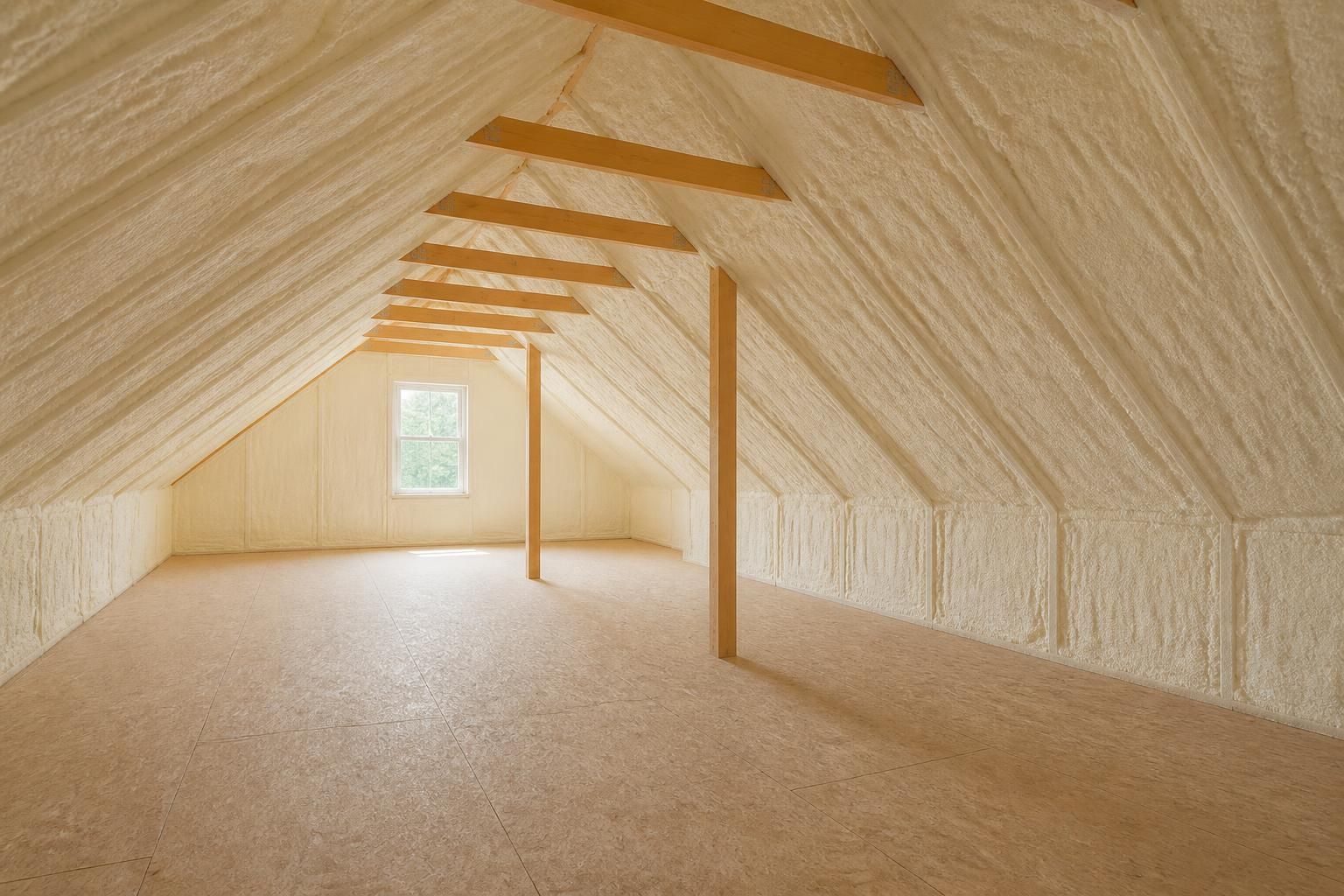
The space is left ready for the next insulation scope, such as blown-in cellulose, fibreglass, mineral wool, or spray foam.
For attic work, this often includes clearing old insulation away from soffits, confirming baffles are open, and making sure the ceiling plane can support a stronger air-barrier strategy before new material goes in.
Insulation problems often show up first as condensation. When warm indoor air leaks into a cold attic or basement assembly, it can reach the dew point and deposit moisture on roof sheathing, framing, or masonry. Over time, that moisture can lead to attic frost, damp fibreglass, stained drywall, or unpleasant odours. Removing the compromised insulation is only one part of the solution, but it is often the step that exposes the real source of the problem.
We pay close attention to vapour control, air barriers, and where moisture is entering the assembly. In some homes, the issue is not insulation depth alone. It is air leakage through penetrations, missing caulking at the top plates, or a poorly sealed attic hatch that allows humid air to rise into the attic and condense against the roof sheathing.
Once the damaged material is out, the assembly can be evaluated for proper moisture management before replacement insulation is installed.
Many homeowners schedule insulation removal as the first step before a larger envelope upgrade. Removing old or contaminated material gives better access for air sealing and improves the quality of the next insulation layer. That matters whether the goal is fewer drafts, warmer floors, better attic performance, or lower heating and cooling demand.
When the assembly is clean and accessible, the new insulation can be installed with more consistent coverage and fewer hidden gaps. That usually means better resistance to conductive heat loss and fewer cold spots around the home.
Homeowners often ask whether removal work can fit into a larger efficiency project. Ontario programs may help when the work is part of an approved upgrade path, but eligibility and incentives can change based on the home, the starting conditions, and the specific measures completed.
Home Renovation Savings currently includes a standalone attic-insulation pathway that offers 50% of eligible project cost up to $1,250, depending on starting R-value and program requirements. The bundled energy-assessment pathway currently offers incentives including up to $1,500 for attic insulation, $3,600 for exterior walls, $2,300 for foundation insulation, $300 for exposed floors, $250 for air sealing, plus a $600 home-energy-assessment rebate and potential bundle incentives.
Energy Affordability Program may provide qualifying Ontario households with no-cost attic or basement insulation and draft-proofing measures, subject to household, home, and heating eligibility.
For homeowners comparing options, BetterHomes London may be relevant only where current verified program or financing details apply. We do not assume eligibility, and we do not promise rebate outcomes. The safest next step is to confirm the present program rules before starting removal or replacement work.
In London, ON N5Z 1R8 and nearby Middlesex County communities, older attics and basements often have mixed insulation layers, patched vapour barriers, and areas where air leakage has weakened the building envelope over time. That can show up as uneven room temperatures, high heating or cooling demand, cold basement walls, or moisture around the attic perimeter. Removal is often the practical reset point before a better-performing retrofit.
At London Insulation Company, we work across residential and commercial properties, including attic insulation, blown-in insulation, spray foam insulation, basement insulation, wall insulation, air sealing, crawl-space insulation, garage insulation, commercial insulation, and new-construction insulation. If the existing material is holding the assembly back, we can remove it and prepare the space for the next stage.
Staining, moisture, mould-like odours, animal contamination, severe settling, or insulation that no longer covers the ceiling plane evenly are common signs. Drafts and cold rooms can also point to hidden air leakage that old insulation is masking rather than solving.
Yes, when frost is caused by humid indoor air leaking into the attic and condensing on cold roof sheathing. Removing damaged insulation can expose leakage paths so they can be sealed before new insulation is installed.
We look for practical leakage points such as the attic hatch, top plates, penetrations, rim joists, and other transitions that often affect thermal performance. Thermal imaging or blower-door testing may also help identify where the assembly needs attention.
The exposed surfaces are reviewed for moisture, damage, and air-barrier gaps. From there, the space can be prepared for new batt insulation, blown-in insulation, spray foam, or rigid board upgrades depending on the assembly.
Yes. Basement insulation removal can uncover damp concrete foundation walls, failed vapour control layers, or rim/band joist leakage. That is especially helpful before adding new insulation or air sealing.
Absolutely. Renovation work often creates the best chance to remove old insulation, correct framing gaps, improve air barriers, and reinstall insulation with better coverage and moisture control.
If your attic, basement, crawl space, or wall assembly shows signs of moisture, contamination, or failed insulation performance, start with a review of what is already there. London Insulation Company can assess the condition of the existing material, identify where the building envelope is leaking, and outline the removal path that supports the next upgrade.
Call +16477005472 or email [email protected] to discuss insulation removal at 413 Hamilton Rd, London, ON N5Z 1R8.
Start Here
Tell us about the rooms, drafts, cold spots, condensation, or attic issues you are seeing. We will help you understand which insulation, air-sealing, or moisture-control approach best fits the building and the conditions in Southwestern Ontario.